Beyond the Vendor Booth: What Renaissance Street Spectacles Understood About Crowds That American Festivals Forgot
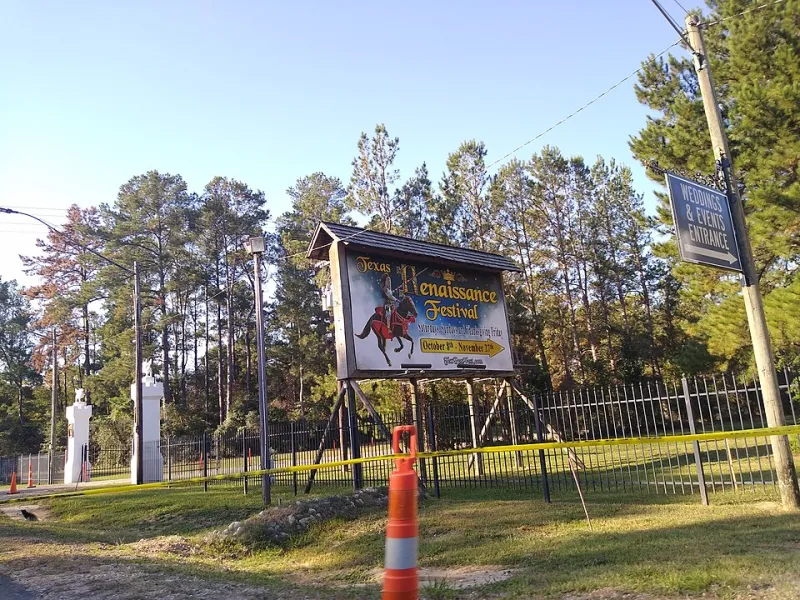
Photo: WhisperToMe, CC0, via Wikimedia Commons
Walk down the middle of nearly any American arts festival on a Saturday afternoon and you'll notice something curious: the crowd moves like water through a channel. Booths on either side, food trucks at the perimeter, a stage somewhere in the distance that most attendees will never reach. People browse, they graze, they leave. The event happened around them, not to them.
Now picture Milan in 1496, when Leonardo da Vinci helped stage a court spectacle for Duke Ludovico Sforza. The street itself became the theater. Musicians, machinery, painted backdrops, and costumed performers dissolved the boundary between audience and production. Nobody was a spectator in the passive sense. You were in it.
That difference — participation versus consumption — may be the single most important lesson Renaissance festival culture can offer American cities watching their downtown events slowly hollow out.
The Problem With the Booth Model
The standard American festival template is a revenue-first design: rent spaces to vendors, charge admission, hope foot traffic justifies both. It's a model optimized for logistics, not wonder. And audiences have noticed. Surveys of festival attendees across the US consistently flag the same complaints — sameness, lack of immersion, nothing to do but walk and buy.
The Renaissance corteo, or street procession, faced the same underlying constraints American organizers do: limited funding, fickle crowds, and the need for civic buy-in. Its solution was structural, not decorative.
Four Principles the Corteo Got Right
The route was the venue. Renaissance processions wound through the city deliberately — past landmarks, through squares, ending at sites with symbolic weight. The architecture did half the work. American festivals would do well to design routes through their own downtowns rather than walling events off in closed-off parking lots or fairgrounds.
Everyone had a role. Guilds, neighborhoods, and workshops each contributed floats, performances, or displays. The festival wasn't something the city consumed; it was something the city made. A modern equivalent: instead of importing food trucks and craft vendors, fund local studios, school groups, and makers to build installations — with their names on them.
Spectacle was engineered, not rented. Leonardo designed theatrical machines, stage sets, and mechanical wonders for Sforzan celebrations. The lesson isn't that every festival needs an engineer, but that a single signature, unforgettable moment — a kinetic sculpture, a projection-mapped facade, a procession with real craft behind it — does more for word of mouth than a hundred booths.
The patron was visible, not corporate. Renaissance spectacles made the sponsor part of the story in a way that felt civic rather than transactional. American festivals wrapped in corporate branding often generate quiet resentment. Sponsorship that funds visible public craft, rather than slapping logos on banners, buys goodwill instead of just impressions.
Why This Matters for Struggling Downtowns
Cities across the US — from post-industrial Main Streets to mid-sized downtowns hollowed out by e-commerce — keep reaching for festivals as economic development. The results are mixed precisely because most events are designed for extraction, not engagement. A festival that gives residents a creative stake, routes them through the places businesses need foot traffic, and produces one genuinely astonishing moment is doing three jobs at once: cultural, economic, and civic.
Leonardo understood that a crowd isn't a revenue stream. It's a material — one that can be shaped, moved, and moved. The Renaissance built its festivals out of that material. American cities still have the chance to.