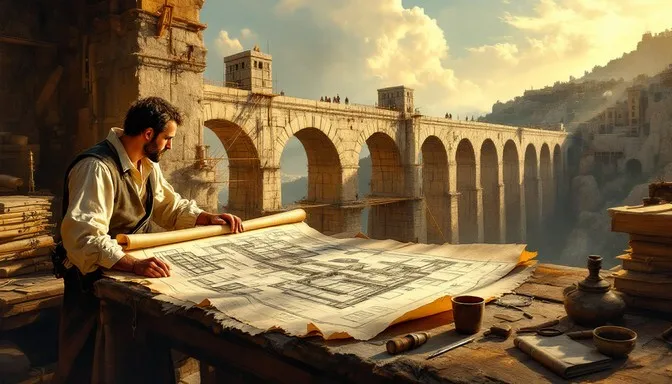
The Bottega Blueprint: How Leonardo's Apprenticeship Studio Outperforms the Startup Model
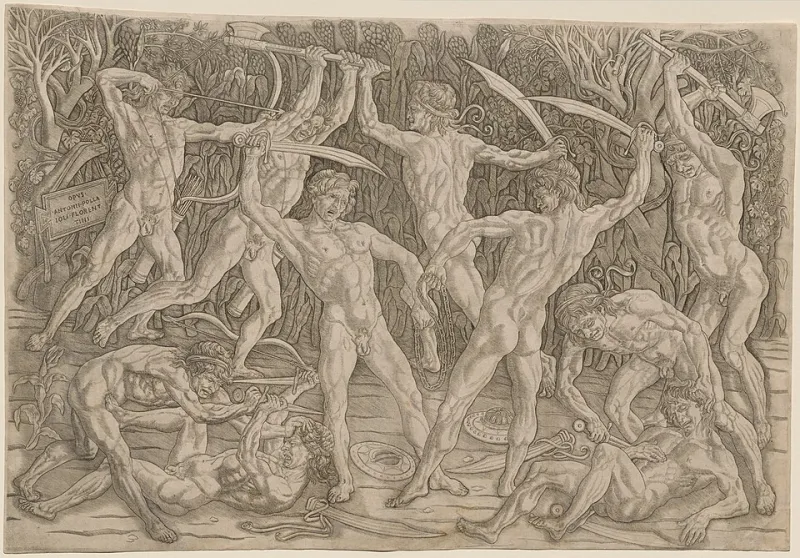
Photo: Antonio del Pollaiuolo, CC0, via Wikimedia Commons
Somewhere between the pitch deck and the pivot, American creative culture lost something it has not yet found a name for. The startup model—with its emphasis on rapid scaling, disruption as virtue, and the lone founder as mythological hero—has colonized not just technology but design, film, publishing, and the visual arts. The result is an ecosystem that prizes novelty over mastery, speed over depth, and individual celebrity over the kind of sustained collaborative intelligence that actually produces lasting work.
Leonardo da Vinci's Florentine bottega, the workshop studio he operated across several decades and multiple cities, offers a structural counter-argument to almost every premise of this model. It is worth examining carefully.
What the Bottega Actually Was
The Renaissance guild workshop—the bottega—was not a quaint historical artifact. It was a sophisticated organizational technology, refined over generations, for producing complex creative work at a level of quality that individual effort rarely sustains. At its core, the model rested on a fundamental premise: mastery is transmitted through proximity, practice, and time, not through credentials or capital.
Leonardo entered the workshop of Andrea del Verrocchio at approximately age fourteen, joining a studio that functioned simultaneously as a teaching environment, a production facility, and a research laboratory. Verrocchio's bottega accepted commissions in painting, sculpture, goldsmithing, and engineering—a range that was not unusual for the period and that reflected the guild conviction that creative intelligence was both broadly applicable and deeply rooted in craft.
When Leonardo eventually established his own studio, he replicated and extended this model. His workshop at various points housed apprentices, assistants, and collaborators who contributed to paintings, prepared materials, executed preparatory studies, and absorbed methods through sustained daily contact with the master's practice. The studio was not a solo operation with a support staff. It was an organism with distributed intelligence.
Knowledge as Living Currency
The most significant feature of the bottega model—and the one most thoroughly absent from contemporary startup culture—was its treatment of knowledge as something that must be embodied rather than merely transmitted. An apprentice in Leonardo's workshop did not receive a curriculum. He received an immersion.
This distinction has profound implications. Information can be transferred through documentation, recorded in databases, and accessed asynchronously. Embodied knowledge—the kind that lives in the hands, in the eye's trained judgment, in the reflexive recognition of quality—cannot. It requires physical co-presence, repeated demonstration, and the particular form of attention that develops only through extended apprenticeship.
American creative industries have largely abandoned this understanding. Design schools produce graduates fluent in software but often uncertain in craft. Film programs graduate students who understand narrative theory but have rarely spent time on a working set learning how experienced crews solve problems in real time. The result is a persistent gap between formal education and professional competence that the industry has come to treat as normal.
Leonardo's workshop produced no such gap. An apprentice who had spent years grinding pigments, preparing panels, and studying the master's preparatory drawings was not an intern awaiting his first real assignment. He was a practitioner in formation, accumulating a form of intelligence that would compound for decades.
Collaboration Without Ego Architecture
The startup model, for all its rhetoric about team culture, tends to organize creative work around a founder mythology that concentrates attribution, authority, and narrative centrality in a single figure. This is not merely a cultural preference—it is a structural requirement of venture capital, which needs a face for the story it is selling to investors.
Leonardo's studio operated on a different logic. While his own authorship was unambiguous in the works that bore his name, the workshop functioned as a genuinely collaborative enterprise in which the contributions of assistants and apprentices were woven into the final product without the kind of attribution anxiety that now dominates creative industries. The painting was the object of collective devotion. Credit was distributed through the guild's understanding of how mastery worked, not through a social media strategy.
This is not a call for the erasure of individual creative identity. Leonardo's genius was irreducibly his own, and the bottega model never pretended otherwise. But the structure of the workshop created conditions in which individual brilliance could be amplified by collective craft rather than isolated within it—a distinction that contemporary American creative culture would benefit from examining honestly.
The Mentorship Deficit
Among the most damaging consequences of the startup model's displacement of the workshop tradition is the erosion of genuine mentorship as a structural feature of creative industries. Mentorship still exists, of course, but it tends to be episodic, informal, and easily disrupted by the job mobility that venture-backed companies require. The kind of sustained, years-long relationship between a master practitioner and a developing one—the relationship that formed the backbone of the bottega—is now the exception rather than the rule.
This matters for reasons that go beyond individual development. Intergenerational knowledge transfer is how cultures maintain continuity with their own best practices. When the chain of transmission breaks, what is lost is not merely technique but the tacit understanding of why certain approaches to creative problems developed in the first place. The bottega model preserved this understanding across centuries. The startup model, with its contempt for precedent, tends to destroy it within a single funding cycle.
Rebuilding the Workshop
There are signs, scattered across American creative life, of a quiet return to workshop principles. Certain architecture firms have structured themselves around long-term apprenticeship relationships. Independent craft schools—in ceramics, furniture making, and traditional printing—have seen renewed enrollment from professionals fleeing the abstraction of digital work. Some film directors have deliberately cultivated stable production families that carry institutional knowledge from project to project.
These experiments suggest that the bottega model is not merely a historical curiosity but a living possibility. What it requires is a willingness to measure creative success by standards other than speed, scale, and exit valuation—standards that Leonardo, working by candlelight over a panel he would revise for years, would have recognized immediately.
The workshop is not a retreat from ambition. It is a more serious form of it.