Patient Genius: What Leonardo's Doomed Flying Machines Reveal About the True Cost of Rushing Toward Breakthrough
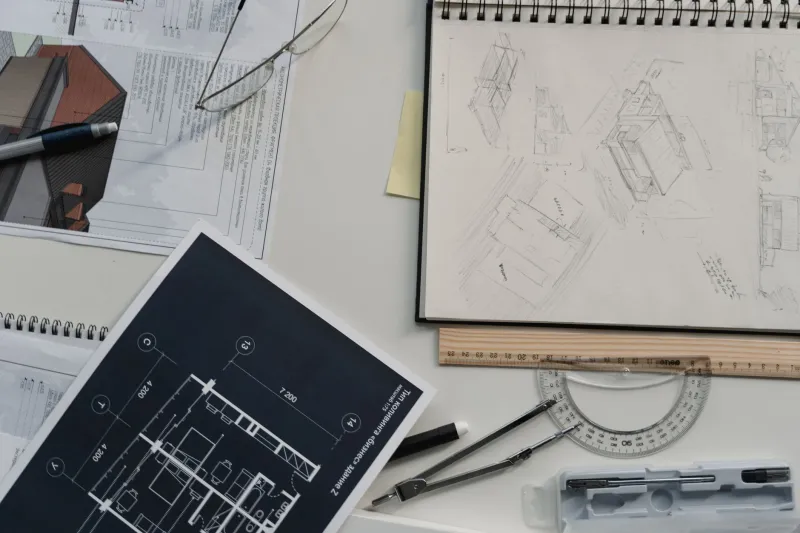
Somewhere between the frenetic pitch decks of San Francisco and the hushed galleries where Leonardo da Vinci's notebooks are kept under controlled light, there exists a profound disagreement about what failure is actually for. In the contemporary American innovation ecosystem, failure has been rebranded as a feature—a necessary toll on the road to disruption, best paid quickly and cheaply. Leonardo, working alone in candlelit Florentine studios more than five centuries ago, would have found that philosophy not merely incomplete but dangerously shortsighted.
His aeronautical notebooks—spanning decades of sketches, calculations, and anatomical studies of birds—represent one of the most extraordinary records of sustained intellectual failure in human history. None of his flying machines ever achieved sustained flight. Not one left the ground under human power. By the metrics of today's startup culture, Leonardo's aeronautical project would have been shuttered after the second pivot, its assets liquidated, its lessons filed under 'lessons learned' and never revisited. That instinct, this article argues, would have been catastrophically wrong.
The Notebooks as Crime Scene
To understand what Leonardo was actually doing with failure, one must first understand what his notebooks were. They were not sketchbooks in the casual sense—repositories of idle doodles or brainstorming sessions meant for public consumption. They were working documents, densely annotated in his characteristic mirror script, filled with iterative revisions that tracked the evolution of an idea across years and sometimes decades. The Codex on the Flight of Birds, composed around 1505, is perhaps the most concentrated example: a systematic dissection of avian anatomy, air resistance, wind behavior, and the mechanical principles that might allow a human being to defy gravity.
What is striking about these pages is not the ambition—though the ambition is staggering—but the method. Leonardo did not simply imagine a flying machine and attempt to build it. He spent years studying how birds actually moved through air, how their wings bent under pressure, how they corrected for turbulence with micro-adjustments invisible to the casual observer. His failures were not random; they were precisely calibrated experiments that narrowed the problem with each iteration. When a design proved unworkable, Leonardo did not discard the question. He refined it.
This is a fundamentally different relationship with failure than the one currently celebrated in American tech culture. 'Failing fast' implies that speed is the primary variable—that the sooner you eliminate a bad idea, the sooner you arrive at a good one. Leonardo's practice suggests the opposite: that some problems are so complex, so deeply embedded in the structure of the natural world, that they cannot be solved quickly, and that the attempt to do so produces not innovation but the illusion of it.
Speed as a Form of Blindness
The consequences of prioritizing velocity over depth are not merely philosophical. They are visible in the landscape of American innovation itself. The past two decades have produced extraordinary advances in software, logistics, and consumer experience—domains where rapid iteration genuinely accelerates discovery. But in the fields that matter most profoundly—energy, medicine, materials science, climate technology—the record is considerably more sobering. These are domains where the underlying problems resist quick pivots precisely because they are governed by physical and biological laws that do not bend to quarterly timelines.
Leonardo understood, intuitively and through hard experience, that certain categories of problem require what might be called longitudinal attention: the willingness to hold a question open across years, accumulating observations that individually mean little but collectively begin to illuminate something true. His aeronautical work ultimately failed to produce a flying machine, but it generated insights into fluid dynamics, structural engineering, and biomechanics that seeded discoveries made by others centuries later. The Wright Brothers, working in Dayton, Ohio in the early 1900s, arrived at powered flight through a process that bore a striking resemblance to Leonardo's: systematic observation, incremental testing, and a refusal to abandon the core question even after repeated mechanical disappointment.
The difference is that the Wrights had the benefit of two centuries of accumulated scientific knowledge that Leonardo helped, in small ways, to set in motion. Innovation, viewed across sufficient time, is rarely a series of discrete breakthroughs. It is a long conversation, and Leonardo's failures were essential sentences in it.
What Observation Actually Costs
There is something else embedded in Leonardo's aeronautical notebooks that modern innovation culture is poorly equipped to value: the sheer cost of genuine observation. Before Leonardo could sketch a flying machine, he had to become, in effect, an expert ornithologist, an applied mathematician, and a structural engineer—none of which were formal disciplines in fifteenth-century Italy. He had to build that knowledge from scratch, through direct study of the natural world, and that process was slow, expensive in time, and frequently humbling.
In an era when information is abundant and attention is scarce, the discipline of deep observation has become genuinely countercultural. It is far easier—and far more socially rewarded—to synthesize existing knowledge quickly and ship a product than to spend years developing the kind of foundational understanding that might eventually make a truly new thing possible. Leonardo's notebooks are, among other things, a monument to the unfashionable virtue of looking carefully before you act.
This is not an argument against speed or iteration as general principles. It is an argument for recognizing that different problems require different temporal relationships. A consumer app and a carbon capture technology are not the same kind of problem, and treating them as if they are—applying the same 'move fast' logic to both—produces a systematic underinvestment in the slow, patient work that transformative innovation actually requires.
The Festival of the Incomplete
At DaVinci Fest, we return again and again to Leonardo's unfinished work not as evidence of limitation but as evidence of a mind that understood the difference between a completed project and a completed inquiry. His flying machines never flew. But the inquiry they embodied—into the relationship between living bodies and the physics of air—was never truly abandoned. It passed, through the slow medium of human culture, into the hands of scientists and engineers who eventually answered the question Leonardo had spent his life refining.
That is what patient failure looks like across the full arc of history. It is not glamorous. It does not generate press releases or Series B funding rounds. But it is, arguably, the only kind of failure that has ever produced anything genuinely new.
The next time an American innovator is urged to fail fast and move on, it may be worth pausing to ask: what would Leonardo have seen if he had looked a little longer? The answer, written in faded ink across five centuries of notebooks, is that he would have seen more than we have yet imagined.